 Moth
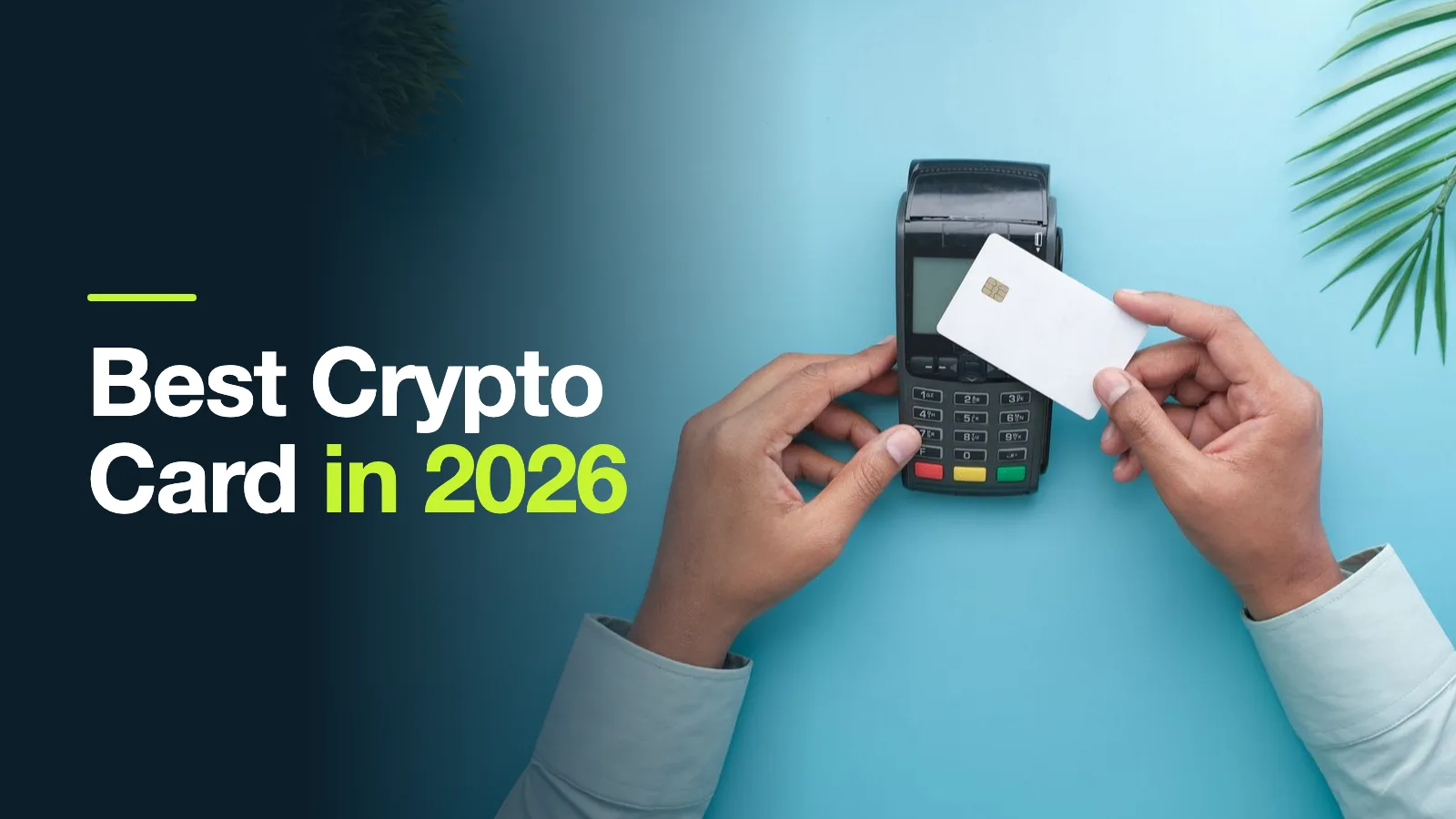
You've got some crypto in your wallet, and now you want to use it for everyday payments. Maybe it's a monthly software subscription, an online purchase, or simply your next coffee.
So you search for the best crypto card in 2026. But instead of a clear answer, you get page after page of rankings, reward claims, and promises that all sound pretty similar.
The best crypto card isn't necessarily the one at the top of a ranking. It's the one that works with your funds, fits the way you spend, and doesn't surprise you with unclear crypto card fees or restrictions.
Rather than hand you another top-10 list, this guide breaks down what actually matters when comparing crypto debit cards, USDT cards, and virtual crypto cards, so you can find one that makes sense for your needs.
Product Overview: What Types of Crypto Cards Are Available?
Not all crypto cards work the same way. Before comparing providers, it helps to understand what you're actually looking at.
1. Crypto Debit and Prepaid Cards

Spend what you've already added
These cards let you spend funds you've already added. Depending on the provider, you may need to transfer money from your wallet to a separate card balance before making a payment.
If you mainly hold USDT and want to use it for everyday purchases, a USDT-funded crypto debit card is probably the category to explore first. One thing to watch: some prepaid cards may face restrictions with recurring payments or certain merchants.
2. Crypto Credit Cards
Crypto credit cards work differently. They may offer credit facilities or crypto-related rewards, but their approval requirements, repayment rules, and reward structures vary.
3. Virtual vs. Physical Crypto Cards
The choice here is pretty straightforward. Some providers offer both, while others focus on just one.
01 / VIRTUAL
Online
Virtual crypto cards
Best for online shopping, digital services, and subscriptions.
- Card details are available in the app, so you can pay online without a plastic card.
- A common choice for software subscriptions and digital services.
02 / PHYSICAL
In store
Physical crypto cards
Designed for in-store payments and, where supported, ATM withdrawals.
- Useful when you're away from your computer.
- Check delivery, ATM availability, and withdrawal limits before you rely on it.
If you need both online and offline spending, having the two card types under one account can be more convenient. MothCard offers virtual and physical cards after identity verification, with options for personal and business use.
4. Exchange-Linked Cards vs. Independent Card Platforms

Where do your funds sit?
Some crypto cards connect directly to an exchange account, while others use a separate funding and card management system.
The main difference comes down to where your funds sit, how you move them, and whether your card depends on the status of another account.
Key Differences: 6 Things to Compare Before Choosing
Once you've narrowed down the card types, it's time to compare the details. You don't need a complicated scoring system. Just look at these six factors for every card on your shortlist.
| What to Compare | What to Look For |
|---|---|
| Funding Method | Which assets and networks are supported? Do you need to transfer funds to a separate card balance? |
| Card Type | Is it virtual, physical, or both? Does it support the way you plan to spend? |
| Card Network | Does it use Visa, Mastercard, or another network? What's the settlement currency? |
| Identity Verification | Is KYC required? Are the verification steps and requirements clearly explained? |
| Fees and Limits | Check issuing, maintenance, FX, ATM, and transaction fees, along with spending limits. |
| Mobile Wallets and Support | Does the specific card support Apple Pay or Google Pay? How can you contact customer support? |
A good provider should make these details easy to find in its official app or help center. If important information is missing, don't assume the answer is favorable.
Wallet Balance Isn't Always Card Balance
This is an easy detail to overlook, especially when you're making your first payment. For example, MothCard USDT top-ups first arrive in your wallet. You then need to transfer those funds to your card balance before spending.
How a USDT top-up reaches your card on MothCard
Top up with USDT
Funds arrive in your wallet balance first.
Transfer to your card
Move the amount you need from the wallet to the card balance.
Pay with the card
Only the card balance can be spent at checkout.
Other providers may use different funding systems, so don't assume the process is the same everywhere.
So, if you've topped up but your payment gets declined, check whether the funds have actually reached your card. If several cards fail at the same checkout, see why every card can get declined at one checkout.
Apple Pay and Google Pay Support Isn't Guaranteed

Check before it becomes a deciding factor
Being able to pay with a physical or virtual card doesn't automatically mean you can add it to Apple Pay or Google Pay. Wallet compatibility depends on the specific card and provider.
Pros, Cons, and Best Use Cases
Different crypto cards solve different problems. Instead of looking for one card that does everything, start with the way you actually plan to use it.
01USDT-Funded Virtual CardsBest for online shopping, software subscriptions, and digital servicesOnline
Why it helps If you already hold USDT, a virtual card can make online payments more convenient without requiring a traditional bank transfer for every purchase. The trade-off You need to understand the funding process, keep enough money on your card, and check whether the merchant accepts your card and region. A successful first payment doesn't guarantee that every recurring payment will go through.
02Physical Crypto CardsBest for in-store purchases and ATM accessIn store
Why it helps A physical card gives you more flexibility when you're away from your computer. It's useful if you want to use crypto-funded cards for everyday offline spending. The trade-off Check delivery arrangements, ATM availability, withdrawal limits, and applicable fees. If you mainly pay for online subscriptions, a physical card may not offer much additional value.
03Exchange-Linked CardsBest for people who already manage most of their crypto through one exchangeConvenience
Why it helps The biggest advantage is convenience. Your funds and card may be managed within the same ecosystem. The trade-off Your spending access could depend on your exchange account status, regional restrictions, or platform policies. Check these rules before relying on the card, especially when traveling.
04No-KYC and Free Crypto CardsMay attract users looking for a quick, low-cost setup, but they deserve extra scrutinyExtra scrutiny
Why people look at them A card advertised as free or requiring no verification can seem like the fastest way to start. The trade-off A no-KYC crypto card isn't automatically a better deal. Look into its issuer, fee structure, support channels, and account recovery process. See is a "no KYC" crypto card actually safe? for the risks. MothCard requires identity verification for all users. This adds a step to getting started, but the requirement is clearly part of the onboarding process.
A Simple Way to Narrow Down Your Options
Start with how you'll actually pay
What will you mainly use the card for?
Pick the branch that matches most of your spending.
Start with a virtual card
Good for subscriptions and online purchases.
Get virtual and physical cards
Look for a provider that offers both.
Check business features
Business verification, card issuance options, and per-card spending limits.
The goal isn't to get the most features. It's to get the features you'll actually use.
Which One Should You Choose?
Still not sure which crypto card to pick? Start with one simple question: what do you need it to do?
Pick the situation closest to yours
A USDT-funded virtual card is a sensible place to start. Before adding it to a subscription, make sure your funds are in the card balance, check the settlement currency, and confirm that the merchant supports your region.
Look for a provider that offers virtual and physical cards under the same account. It's generally easier to manage your spending when you don't have to juggle multiple providers.
Take advertised benefits with a grain of salt. Check the actual fee schedule, spending limits, and reward conditions in the provider's official app. A low advertised fee doesn't always mean a lower overall cost.
Look beyond the card itself. Check business verification requirements, the number of cards you can issue, and whether spending limits can be managed separately.
Could MothCard Be a Good Fit?
MOTHCARD
Personal & Business
Spend USDT through Visa and Mastercard
If you're looking for a way to spend USDT through virtual or physical Visa and Mastercard cards, MothCard is one option worth considering.
- Supports personal and business use.
- Requires identity verification.
- Before getting started, review the available card options, funding steps, fees, and supported regions to make sure they match your needs.
Conclusion: Focus on What Works for You

Choosing doesn't have to be complicated
Forget about chasing the number-one spot on a ranking list. Focus on the things that affect your actual payments: how you add funds, which card type you need, what network it uses, how verification works, and what fees and limits apply.
A little research before signing up can save you a lot of frustration later. Take your shortlist, check the details in each provider's official app, and choose the card that fits the way you spend. That's a much better definition of the best crypto card in 2026.
Further reading
- Is a "no KYC" crypto card actually safe?
- How to pay for ChatGPT with USDT
- How to pay for Claude with USDT
FAQ
Is there a single best crypto card in 2026?
Not really. The best option depends on how you fund your card, whether you need virtual or physical payments, which network it uses, and where you plan to spend, so instead of relying on rankings alone, compare funding methods, card types, networks, KYC requirements, fees, and mobile wallet support.
What should I check before applying for a crypto card?
Start with the essentials: whether the card supports your preferred cryptocurrency and network, whether identity verification is required, whether fees and spending limits are clearly listed, whether your wallet balance is separate from your card balance, and how you can contact customer support. These details tell you much more than a promotional headline.
Can I pay for ChatGPT or Claude with a crypto card?
It depends on the card, the merchant, and your region. Some crypto cards may work for these subscriptions, but acceptance isn't guaranteed, so check the merchant's payment requirements, make sure your card is funded, and confirm that recurring payments are supported.
Do I need to top up before spending with a crypto card?
It depends on the provider. With MothCard, USDT top-ups first go to your wallet, and you then need to transfer the funds to your card balance before making payments. Some exchange-linked cards may work differently, so check the funding instructions in the official app.
Can I add a crypto card to Apple Pay or Google Pay?
Not every crypto card supports mobile wallets. Compatibility depends on the specific card and provider, so check the official card details before assuming you can add it to Apple Pay or Google Pay.
AI subscriptions
Cards that pay for ChatGPT and Claude
These six cards pay for ChatGPT and Claude subscriptions. Fund them from your USDT wallet, with no currency exchange or bank wire.
- Glow✓ ChatGPT · ClaudeCard number at checkout
- Pulsar-2✓ ChatGPT · ClaudeCard number at checkout
- Pulsar-1✓ ChatGPT · ClaudeCard number at checkout
- Sapphire✓ ChatGPT · ClaudePay with Google Pay
- Beam✓ ChatGPT · ClaudePay with Google Pay
- Lumen✓ ChatGPT · ClaudePay with Google Pay
Acceptance can change with the merchant, the card network and risk rules, so no payment is guaranteed. Fees and limits are shown in the app.
See all cards →