 Moth
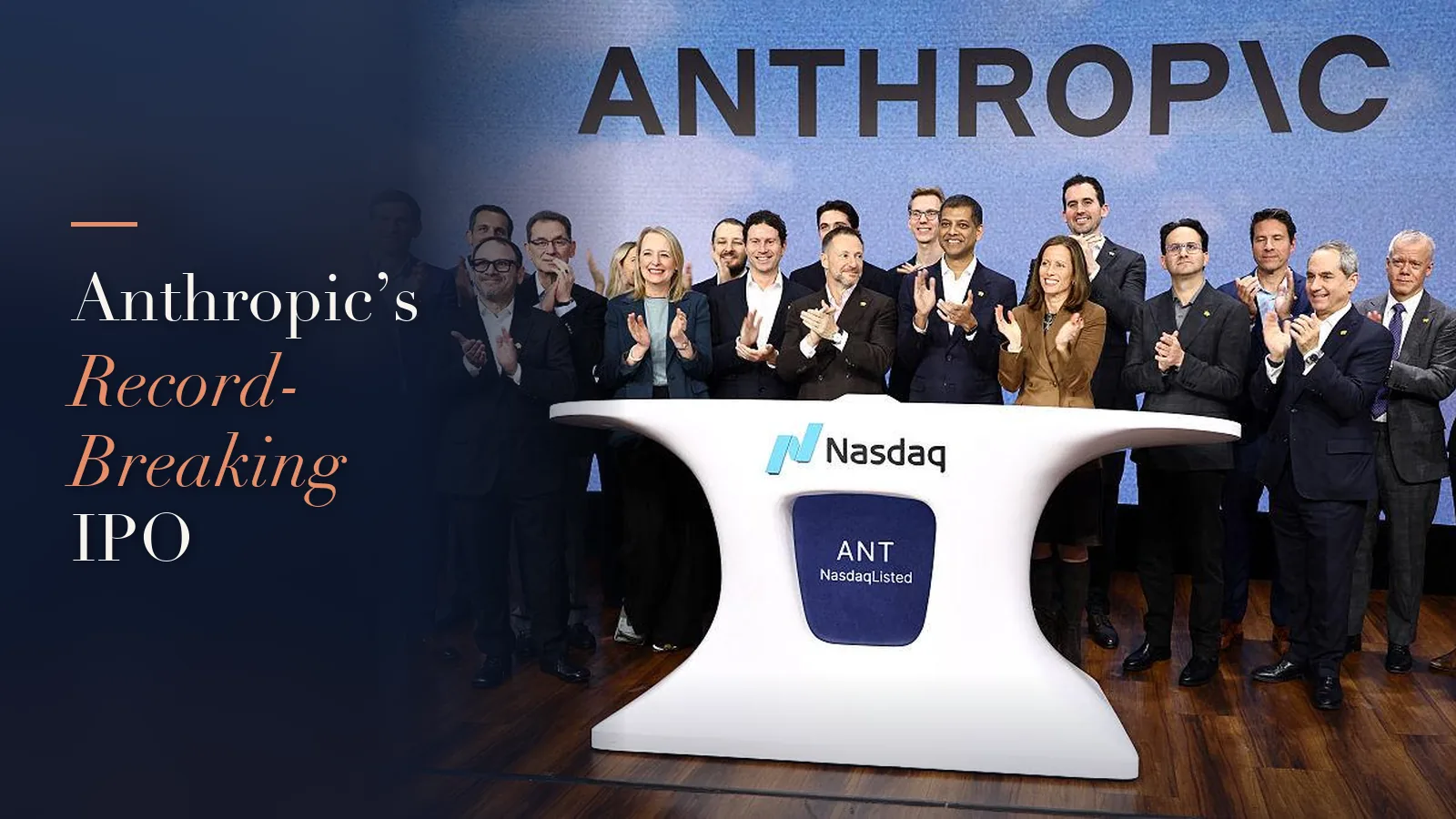
On November 19, 2026, Anthropic, the company behind the Claude family of AI models, made its debut on the Nasdaq under the ticker symbol ANT.
The IPO was priced at $83 per share and raised approximately $81.3 billion, one of the largest public offerings in history. On its first day of trading, the stock climbed more than 30% at one point, briefly pushing the company's fully diluted valuation to around $2 trillion. It closed at $97.17, up roughly 17% from its IPO price.
That raises a few obvious questions. How can a company built around AI models command a valuation like that? What does the listing tell us about where AI is heading? And what does it mean for everyday users who pay for tools like Claude?
1. How Did an AI Company Become Wall Street's New Favorite?

More than a single app
Founded in 2021, Anthropic builds Claude, a family of AI assistants and large language models for individuals and businesses. Its value isn't tied to one application. It comes from its underlying models, its research, and the products built on top of them.
As generative AI has taken off, Claude has moved into coding, writing, data analysis, and enterprise knowledge management. More developers, professionals, and businesses now use AI tools in their everyday work, and that growth has caught investors' attention.
Key Numbers Behind the Anthropic IPO
According to Reuters' coverage of the listing, these are the figures worth knowing:
| IPO Details | Figures |
|---|---|
| Listing date | November 19, 2026 |
| Stock exchange | Nasdaq |
| Ticker symbol | ANT |
| IPO price | $83 per share |
| Funds raised | Approximately $81.3 billion |
| First-day closing price | $97.17 per share |
| First-day closing gain | Approximately 17% |
| Intraday fully diluted valuation | Briefly reached around $2 trillion |
The bigger story is who is listing. Anthropic is one of the first frontier AI model developers to go public, which gives investors a direct way to put a price on foundational AI technology.
2. Why Is Anthropic Worth So Much? Three Key Reasons
The valuation isn't only about AI being a hot sector. Investors are rethinking how much commercial value AI could create in the years ahead.
1. AI Is Turning from a Tech Novelty into a Productivity Tool

From chatbot to everyday work
Not long ago, most people tried an AI chatbot once or twice out of curiosity. Today, tools like Claude help users write code, analyze documents, organize research, and handle information-heavy tasks every day.
For businesses, the value lies in cutting repetitive work and helping employees get more done:
- Software developers use AI to write, review, debug, and improve code.
- Marketing professionals use it to research markets and draft content.
- Business teams use it to analyze documents, summarize meetings, and work with internal information.
- Researchers use it to speed up searches and organize large amounts of material.
Once AI becomes part of real workflows, it can become a core tool that businesses rely on every day. That is one of the main reasons investors are willing to pay a premium for Anthropic's future growth.
2. Enterprise Demand Is Creating a New Market

Businesses need more than a free plan
Companies may need higher usage limits, more advanced models, team collaboration features, better data management, and AI that connects with their existing systems.
That opens several revenue streams beyond individual subscriptions: APIs, team plans, and enterprise solutions. The model looks a lot like traditional SaaS. Once a company builds a tool into its daily operations, it tends to keep paying for it, and if AI keeps helping employees work faster, the company has good reason to spend more.
So Anthropic's value isn't only about how many people use Claude today. It's about whether Claude becomes an essential part of how businesses operate tomorrow.
3. AI Could Become Infrastructure for the Next Digital Economy
Each shift became something businesses can't work without
The internet
Changed how people find information and do business.
Cloud computing
Gave companies powerful IT without building it themselves.
AI models
Could power software development, customer support, operations, data analysis, and automated workflows.
If that trend continues, AI models could become as essential as cloud services are today. Investors aren't just betting on Claude's current user base. They're betting on how big the AI market could become.
3. The Challenges Behind the Trillion-Dollar Valuation
A blockbuster IPO doesn't make a company risk-free. The AI industry still faces some very real challenges.
1. AI Models Are Extremely Expensive to Build and Run

Every request has a real cost
Training and running large models takes high-performance chips, data centers, electricity, and specialized talent. Unlike traditional software, every model request generates real computing costs, so more users means more spending on compute.
AI companies have to balance user growth, pricing, and infrastructure spending. Reuters reported that Anthropic spent close to $9 billion on computing infrastructure in the first half of 2026, and roughly another $5 billion in the third quarter.
2. Competition Is Heating Up
Anthropic isn't the only company building advanced models. OpenAI, Google, and others keep launching new models and products. Open-source models are improving quickly, and some businesses are exploring running their own.
If rivals offer similar performance at lower prices, Anthropic could face pressure on pricing and margins. The real question for investors is whether it can keep a competitive edge over the long run.
3. A High Valuation Needs Strong Results to Back It Up
Growth expectations get tested
Public markets often pay a premium for future growth, but sooner or later a valuation has to be supported by real revenue and a path to profit. If growth slows, compute costs keep rising, or competition pushes prices down, the market may rethink what the company is worth.
Anthropic's performance as a public company will test more than one business model. It could show whether the AI industry's growth story can turn into sustainable profits.
4. What the IPO Means for Everyday AI Users

AI is becoming part of daily routines
In the early days, many people used AI to write a paragraph or answer a quick question. Now developers use Claude for coding every day, creators use it to research topics and prepare first drafts, and students and researchers use it to analyze and organize their work.
As AI becomes part of daily workflows, users expect more: better reliability, more capable models, and higher usage limits. That is one reason AI subscriptions are getting more attention.
Why Are More People Paying for AI?
Free plans are fine for trying new features and occasional tasks. Frequent users often hit their limits. Paid plans usually add more usage, more advanced models, and extra features, though the exact benefits depend on the product, the plan, and the current subscription policy.
Higher usage limits
Fewer interruptions
Debugging code, analyzing long documents, or holding long conversations goes more smoothly when you aren't running into caps.
More advanced capabilities
Tackle harder tasks
Paid plans often unlock additional models or features. What's available depends on Claude's current plans.
Time saved
An investment, not just a bill
If AI saves you time every day, the subscription pays for itself in productivity.
For developers, freelancers, researchers, and creators, the question isn't just whether a subscription is worth paying for. It's whether the tool helps them do better work in less time.
5. As AI Subscriptions Grow, International Payments Matter More
As Claude and ChatGPT become part of more people's work, users care about more than model performance. They also want a convenient, reliable way to pay. For some international users, that can be tricky:
- Their bank card may not support international online payments with certain merchants.
- Payment methods and billing requirements vary by region.
- Transactions can be affected by the card's issuing country, merchant restrictions, or risk controls.
- People who subscribe to several AI and SaaS tools may want an easier way to manage that spending.
For people who use several AI tools, a suitable international payment method makes managing subscriptions more flexible. If your card keeps getting rejected, see why virtual cards get declined on AI subscriptions and what to do when a Claude Pro payment fails.
Why Can Virtual Cards Help with Some AI Subscriptions?

A card built for online payments
A virtual card works like a regular bank card online. It has a card number, expiration date, and security code that can be used for eligible online purchases.
Compared with physical cards, virtual cards can help in a few ways:
- Fast to start: No waiting for a card in the mail. Once issued and activated, it can be used online according to its terms.
- Easier spending management: You can set aside different cards and funds for different needs.
- Made for digital services: They can work with online merchants that accept the relevant Visa or Mastercard products.
- Another option for cross-border spending: Useful when paying for international SaaS products, AI tools, and other digital services.
6. MothCard: More Payment Options for Your AI Subscriptions
MOTHCARD
Personal & Business
Fund with USDT, pay with Visa or Mastercard
For users who prefer to fund online spending with USDT, MothCard offers another way to pay for Claude, ChatGPT, and other AI subscriptions.
- USDT wallet top-ups.
- Visa and Mastercard virtual and physical cards.
- Options for both individual and business users.
- Online payments at merchants that accept the relevant cards and meet their usage requirements.
AI subscriptions
Cards that pay for ChatGPT and Claude
These six cards pay for ChatGPT and Claude subscriptions. Fund them from your USDT wallet, with no currency exchange or bank wire.
- Glow✓ ChatGPT · ClaudeCard number at checkout
- Pulsar-2✓ ChatGPT · ClaudeCard number at checkout
- Pulsar-1✓ ChatGPT · ClaudeCard number at checkout
- Sapphire✓ ChatGPT · ClaudePay with Google Pay
- Beam✓ ChatGPT · ClaudePay with Google Pay
- Lumen✓ ChatGPT · ClaudePay with Google Pay
Acceptance can change with the merchant, the card network and risk rules, so no payment is guaranteed. Fees and limits are shown in the app.
See all cards →Card fees, spending limits, issuing regions, and available features depend on the options shown in the app. Payment success also depends on merchant policies, card network rules, and transaction checks, so not every subscription is guaranteed to go through.
7. Final Thoughts: The Next Stage of AI Is About More Than Technology
Anthropic's record-breaking IPO shows how much potential the market sees in AI. From frontier models to enterprise solutions and consumer subscriptions, the industry is growing into a much broader commercial ecosystem.
Big challenges remain. Computing costs, competition, and the path to profit will decide which companies last, and only time will tell whether today's valuations are backed by sustainable results.
One thing is already clear: AI is becoming a practical tool people rely on at work and in daily life. For everyday users, knowing what different tools can do, picking the right plan, and having a convenient way to pay are all part of using AI regularly. As Claude keeps evolving, demand for AI subscriptions and flexible cross-border payments may grow right alongside it.
References
- Reuters: Anthropic's blockbuster debut tests Wall Street's faith in AI boom
- Reuters: Anthropic joins SpaceX as a mega-IPO company
- Anthropic IPO official prospectus
FAQ
What is Anthropic, and why is it worth so much?
Anthropic is an AI company and the developer of the Claude family of AI models. Its high valuation reflects investor expectations for AI technology, growing enterprise demand, and the industry's long-term commercial potential.
Is Claude free to use, or do you need a subscription?
Claude offers a free plan as well as paid plans for individuals and businesses. Paid subscriptions generally come with higher usage limits or additional features. For the latest pricing and plan details, check Claude's official website.
How can I pay for a Claude Pro subscription?
You can subscribe with the payment methods supported on Claude's official checkout page in your region. Available options may vary depending on your location, account, and merchant policies.
Can you use a virtual card to pay for Claude?
Some virtual cards work for online payments to Claude and other AI services, but not every virtual card is guaranteed to be accepted. Payment success depends on the card's issuing region, payment network, merchant policies, and transaction risk checks.
Can you use MothCard to pay for Claude and other AI subscriptions?
MothCard offers USDT-funded Visa and Mastercard virtual and physical cards for eligible online payments, including some AI subscription scenarios. Whether a payment goes through depends on the specific card, merchant policies, and transaction verification.